The comparative assessment accelerating Gap to Growth
MESHA provides comparative cohort insights to guide timely instructional action for teaching teams.
What MESHA is
The Maths, English, Science and Humanities Assessment
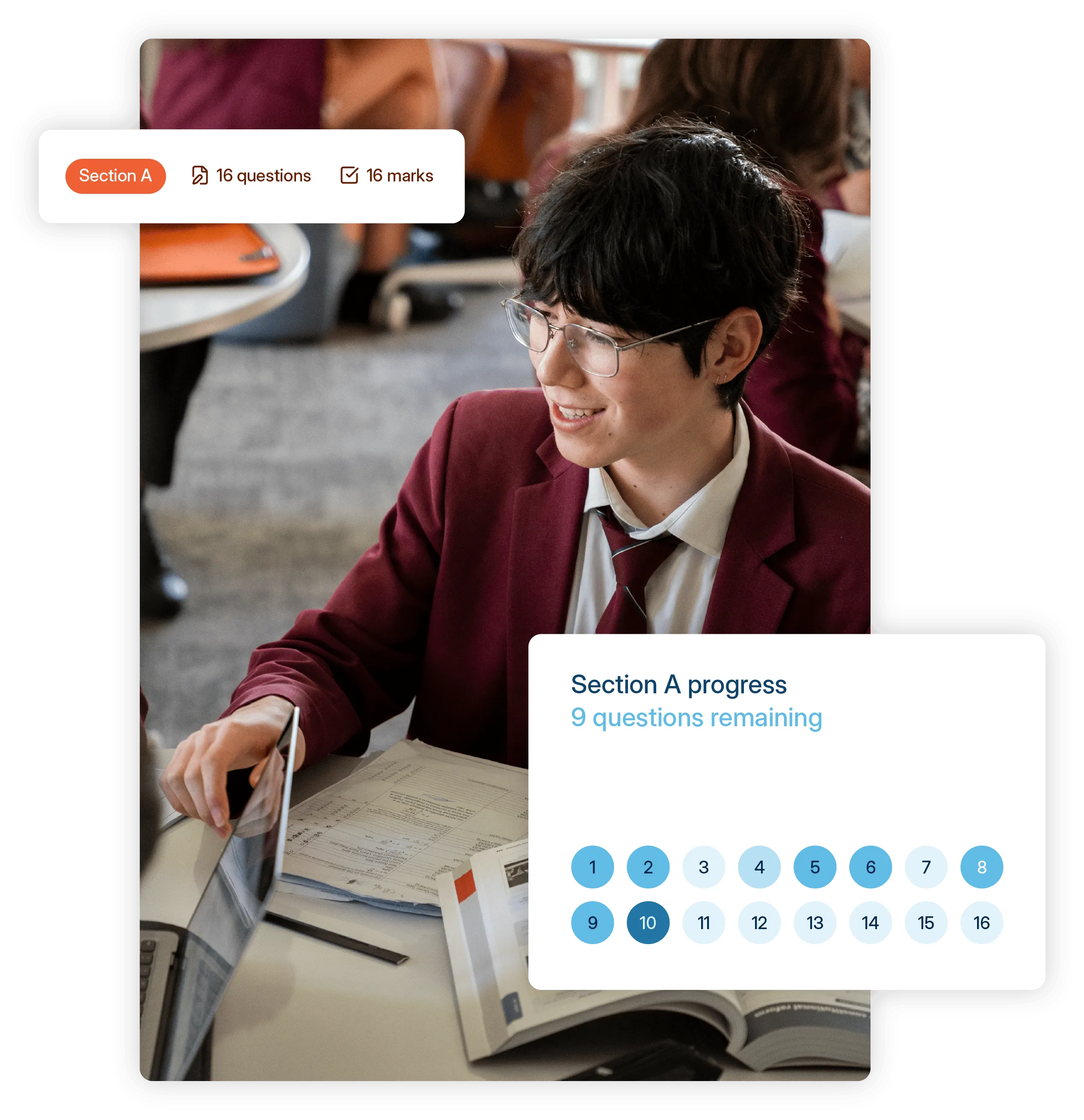
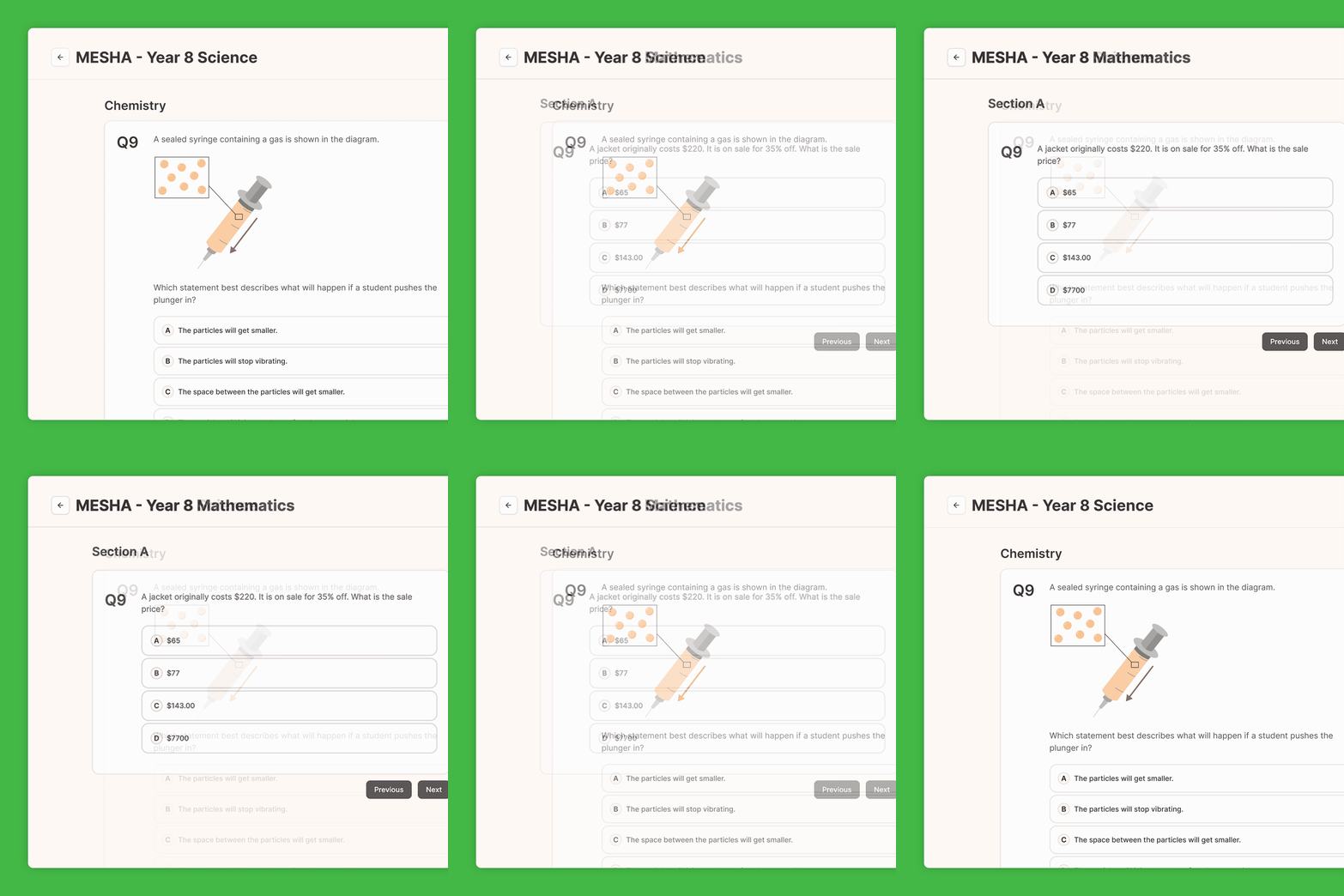
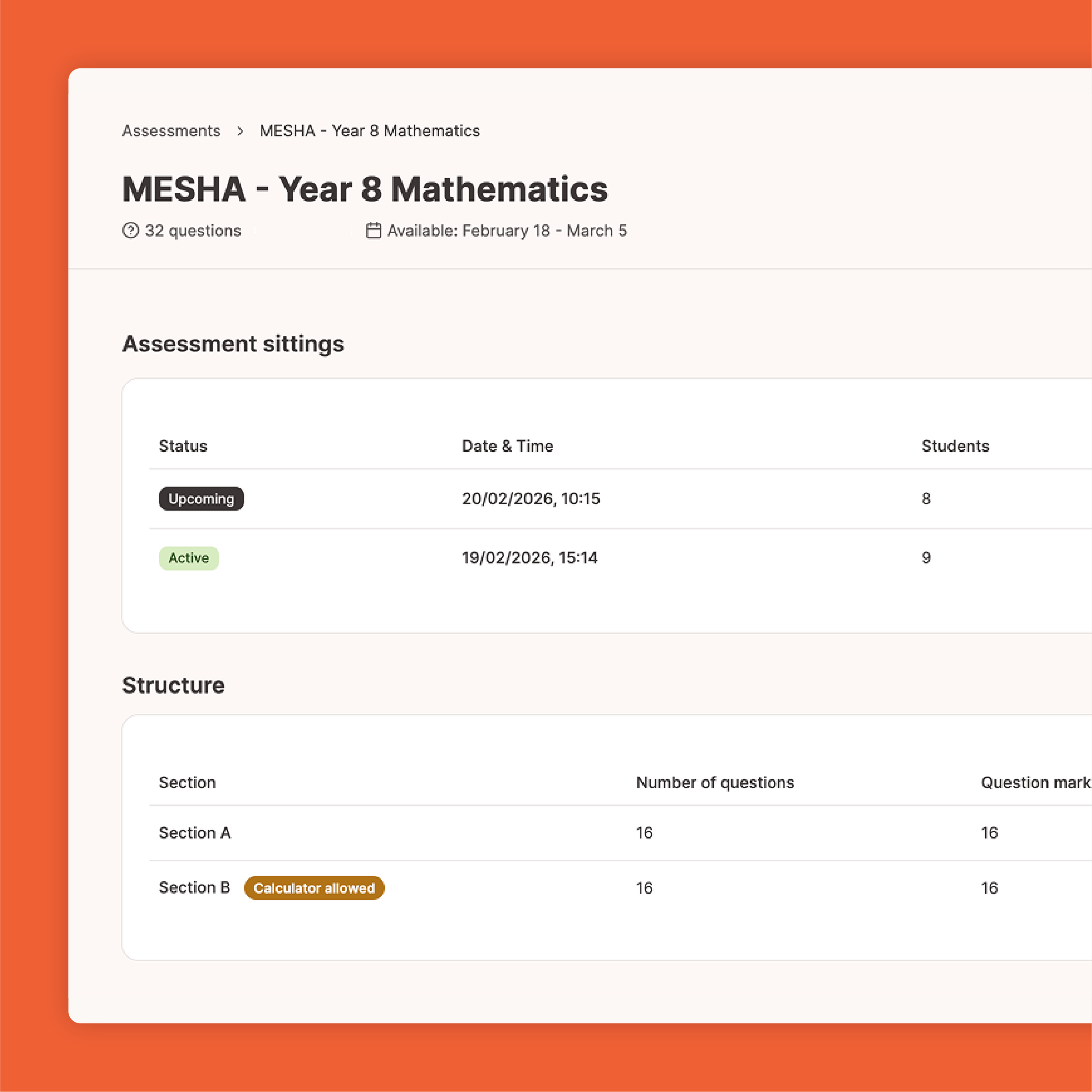
MESHA is a formative assessment designed to be delivered in a 40-minute sitting for Years 7-10 students.
Built in partnership with Dr Greg Ashman and 14 top achieving Victorian and New South Wales secondary schools












The problems MESHA addresses
Gap to Growth
There is an increasing variation in conceptual understanding amongst students. In Maths, this is estimated to be up to 7 years worth of conceptual differences within one classroom (Siemon and Virgona, 2021).
MESHA is designed to identify concept-level performance at an individual, cohort, and like-school level. Unlike existing assessment solutions that offer broad top, middle, and low band data, the explicit data provided by MESHA enables teaching teams to execute cohort interventions that address student gaps and accelerate growth in a timely manner.
How MESHA grows cohort results
Delivering actionable insights for your team
Question-level clarity
Comparative data
Driving instructional action
Actionable by design
What is MESHA?
Dr Greg Ashman explains how MESHA is designed as an engine for curriculum improvement. It helps teaching teams identify the easiest wins to make the curriculum more robust and to target learning gaps.
What the MESHA pilot for Year 8 Maths reveals about student learning
Conducted across 7 Victorian secondary schools in Term 3, 2025, the MESHA pilot for Year 8 provides early evidence that a comparative, misconception-linked assessment can strengthen formative decision making for both teachers and school leaders. Key findings suggest that MESHA comparative data gives meaning to student performance, allowing teaching team to take targeted action to address learning gaps.
Read the full report from the pilot to learn about the instructional implications from the findings.
Join the next assessment
Running MESHA in your school
MESHA dates 2026
Wed 19 August – Tue 1 September
Year 7-10 Maths (NSW Syllabus)
Thu 3 September – Wed 16 September
Year 7-10 Maths (Victorian Curriculum 2.0 / Australian Curriculum 9.0)
Thu 15 October – Wed 28 October
Year 7-10 Science (Victorian Curriculum 2.0 / Australian Curriculum 9.0)
Register your interest
Try MESHA risk-free in 2026
FAQs
Everything you need to know about MESHA
MESHA is designed for instructional action, not just measurement. Unlike assessments that arrive months later or don’t allow like-for-like comparison, MESHA provides:
- comparison across similar students, classes, and schools
- question-level insight tied to misconceptions
- reporting early enough to inform teaching decisions for the same cohort
Schools receive their MESHA reports within 10 days of the assessment window closing. This timing is deliberate to ensures insights arrives while there is still time to adjust instruction.
MESHA is designed to fit within normal teaching schedules with minimal disruption.
The assessment is completed during class time and does not require additional preparation or marking from teachers. Once the assessment window closes, results are available within 10 days, with reporting provided in a format that supports both classroom and leadership use.
Schools typically find MESHA requires significantly less time and administrative effort than large-scale assessment cycles, while providing more meaningful and actionable insights.
MESHA provides:
- question-level performance data
- identified conceptual gaps
- comparison across classes, year levels, and the wider MESHA cohort of schools
This supports decisions about reteaching, intervention, extension, and curriculum focus.
In 2026 MESHA is available for Years 7-10 Maths and Science in Victoria, and Years 7-10 Maths in New South Wales. For year 10 students in both Victoria and New South Wales, there are two assessments available so that students can sit an assessment best suited to their level. The range of subjects will be expanded further in 2027.
There is no obligation to continue beyond the initial MESHA assessment.
Schools can try MESHA and see whether the insight and reporting are valuable for their context before making any longer-term decisions. Participation does not lock schools into ongoing use, and MESHA can be trialled as a standalone assessment.
This approach allows leaders to evaluate MESHA risk-free, based on real data from their own students.
MESHA is intentionally not adaptive. Every student completes the same assessment in the same window, which allows for valid comparison across classes, year levels, and schools, and enables clear misconception analysis.
MESHA is available to all schools, regardless of whether they currently use Edrolo resources.
Schools can see how they perform relative to the MESHA cohort, but cannot view individual school results. There are no league tables or public rankings – the focus is on insight, not competition.
Data is handled with strict privacy controls:
- schools only see their own detailed results
- no student-level data from other schools is visible
- no public reporting or rankings are published
All data is handled in line with the Edrolo privacy policy. MESHA is designed to support professional judgement, not undermine it.